I chose early on in the project to work in stop-motion, as I love the aesthetic and handmade feel of the pieces I create. Additionally, during the professional practices unit, I realised how important it is for me to create works that align with my prospects.
I favour working with stop-motion equipment as I am familiar with it, and as such, I feel comfortable experimenting without it causing unnecessary stress during the crafting process. However, during the project, my disability made it difficult to access the stop-motion studio, so I began problem-solving, booked the accessible rostrum, ensured the lighting was warm to help with headaches, and had the help of a study assistant to aid with retrieving equipment and setting up the camera. This enabled me to navigate creating during a flare-up of my symptoms comfortably.
This taught me so much resilience and bravery to advocate for myself to remain in the same spaces and have the same opportunities as my peers. My film would have looked drastically different if I had set limitations instead of finding ways to overcome the difficulties that arose.
After I had my setup figured out, I began shooting. This is the part of the process that goes extremely quickly and smoothly, as I have already worked on the hardest parts, such as making the props, setting up my area, and filming my references.
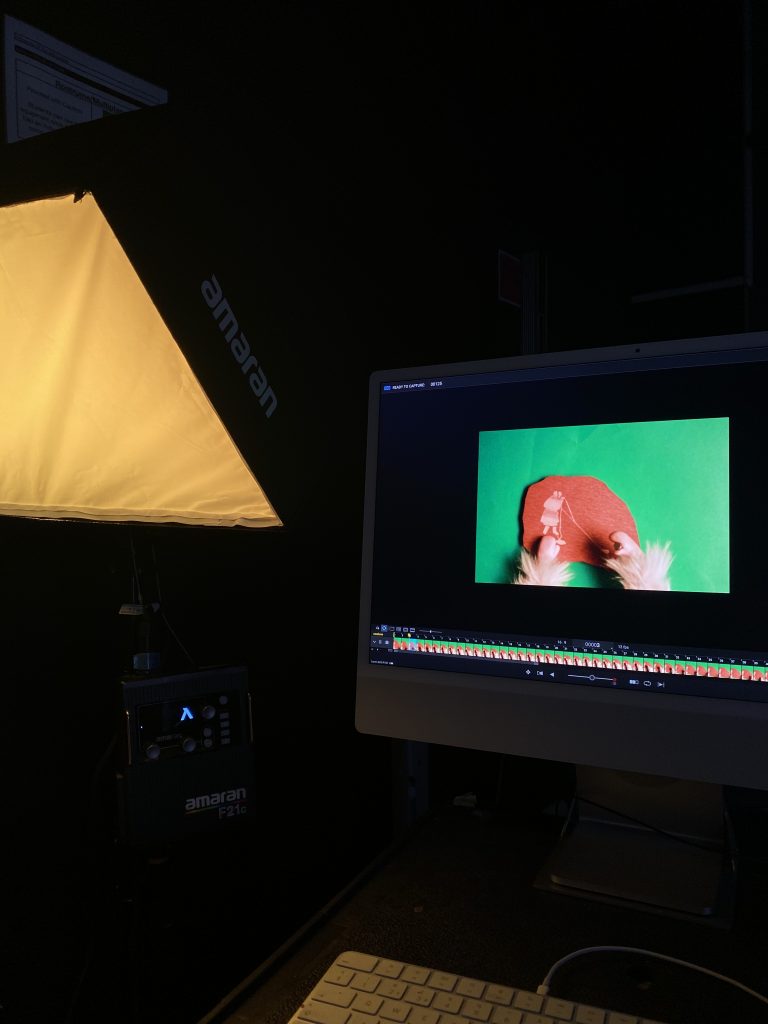
When moving my props, I got into a rhythm of creating, as though it were muscle memory. I really enjoyed it, and my only reflection was to watch the frames back more frequently, as deleting and reworking them was exceptionally tedious. Whilst I weirdly favoured it, it sped up the process a little bit more.
Leave a Reply