My first experiment was unexpected and was meant to be a personal project that drifted into the Tower of Babel assignment. On a random night, I was looking at photographs of my late father and noticed that, because of how old the photos were when they were taken, they have a fun sort of film/noise over them that might develop nicely under my scanner. So I gathered every photo I have of him and some random nature polaroids I had and began scanning. To my surprise, there were little moments captured of him fading into the background or feeling ‘lost’. This inspired me to create a piece on grief and the process of loosing something to the past.
I began to consider this concept in relation to the story of the Tower of Babel and how, because the community was separated by language diversity, they all lost something that once brought them together and had to relearn how to navigate a space that once felt comfortable. Grief works so similarly in terms of separating families and loved ones, and once enjoyable spaces.
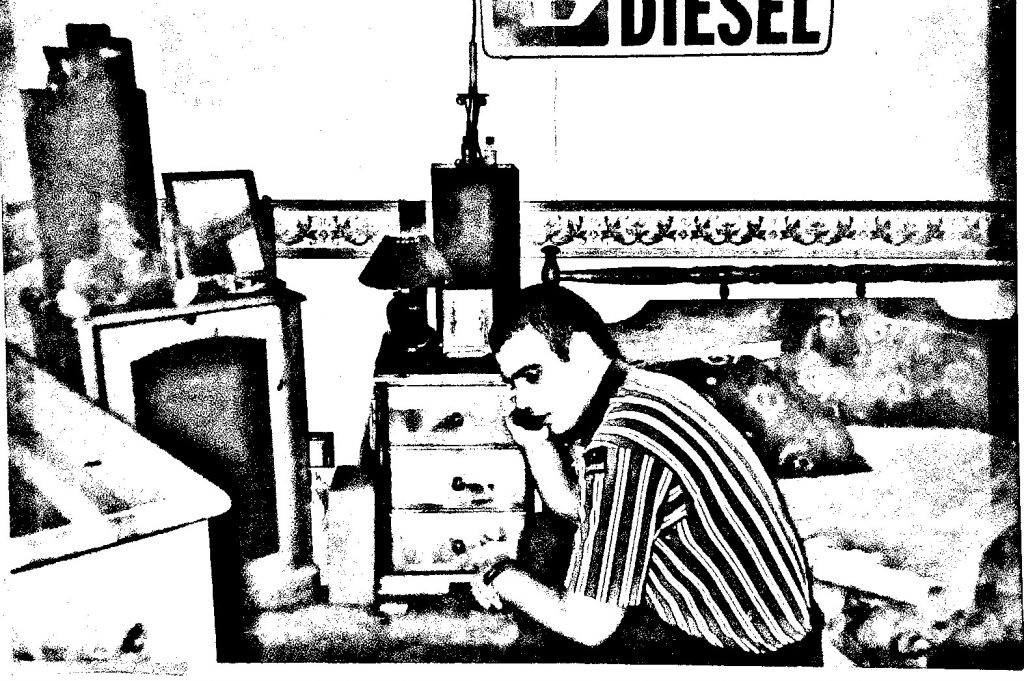
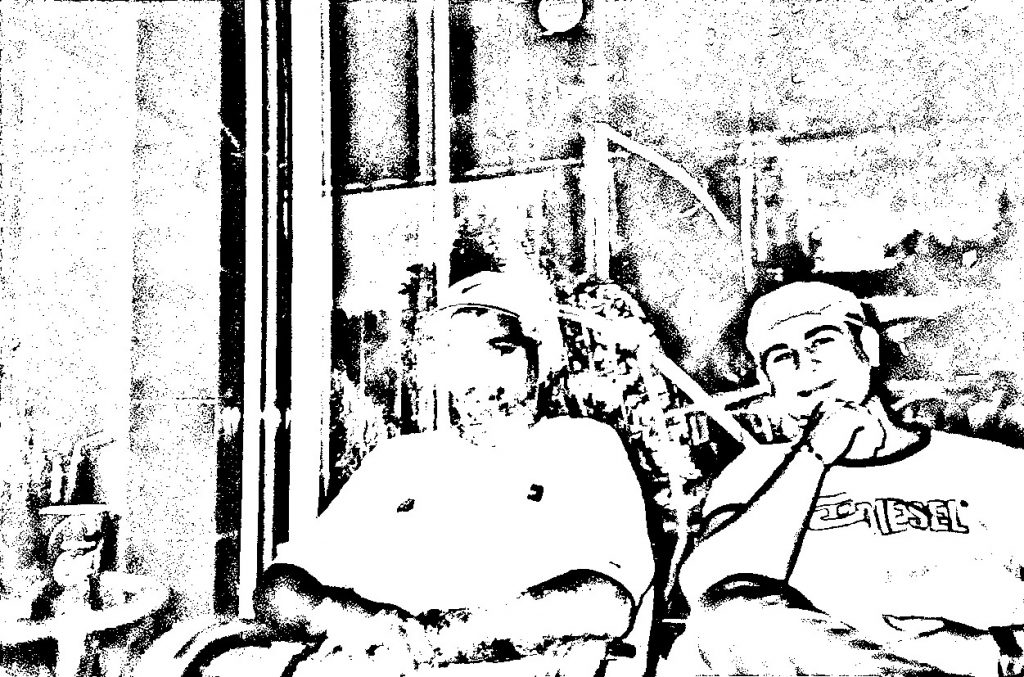
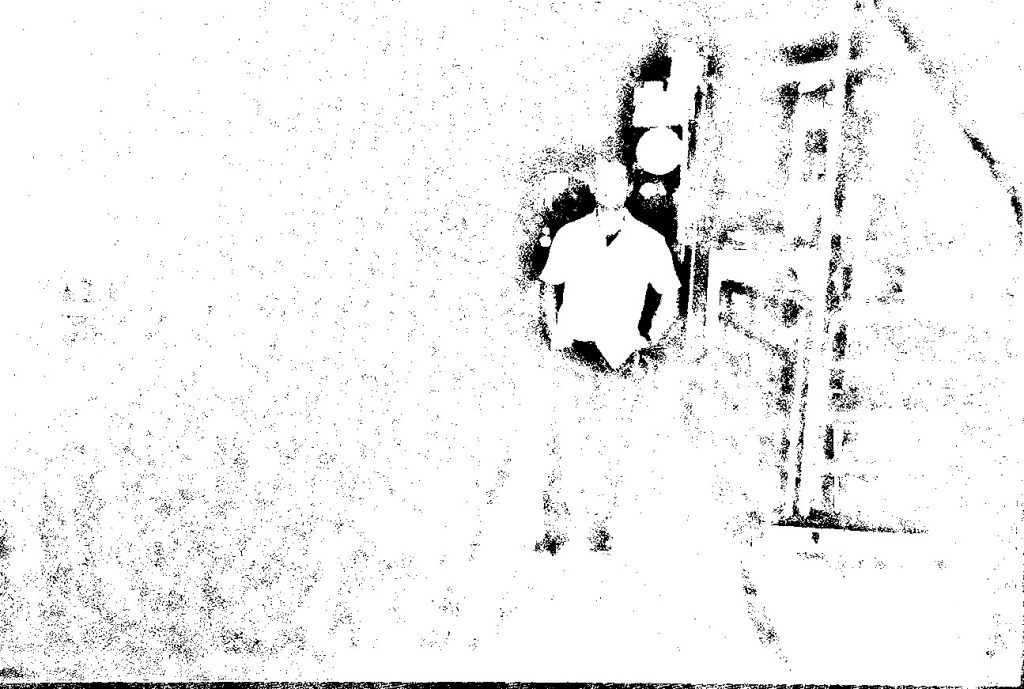
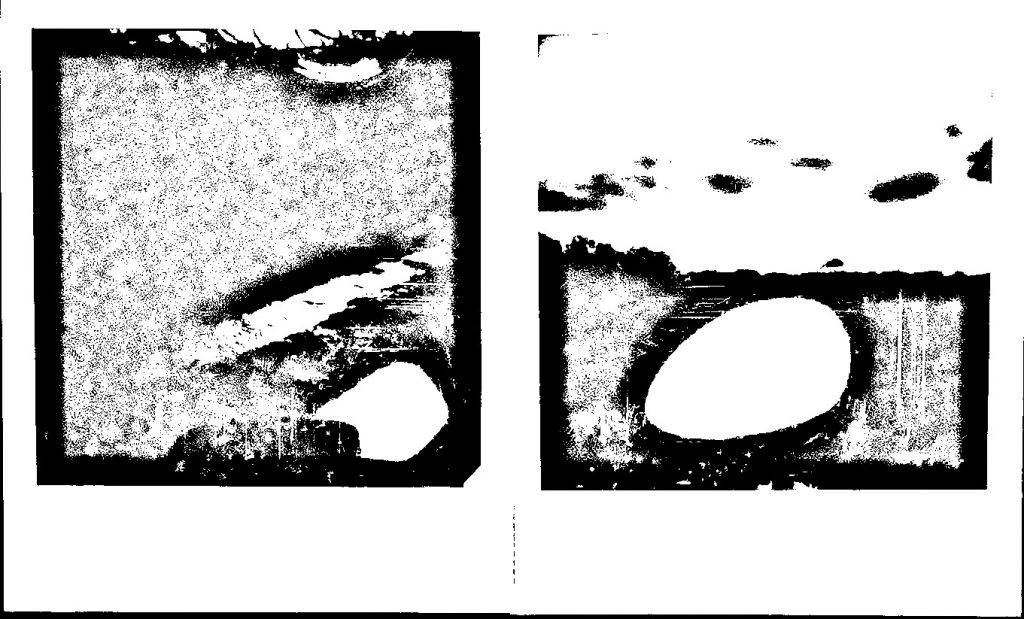
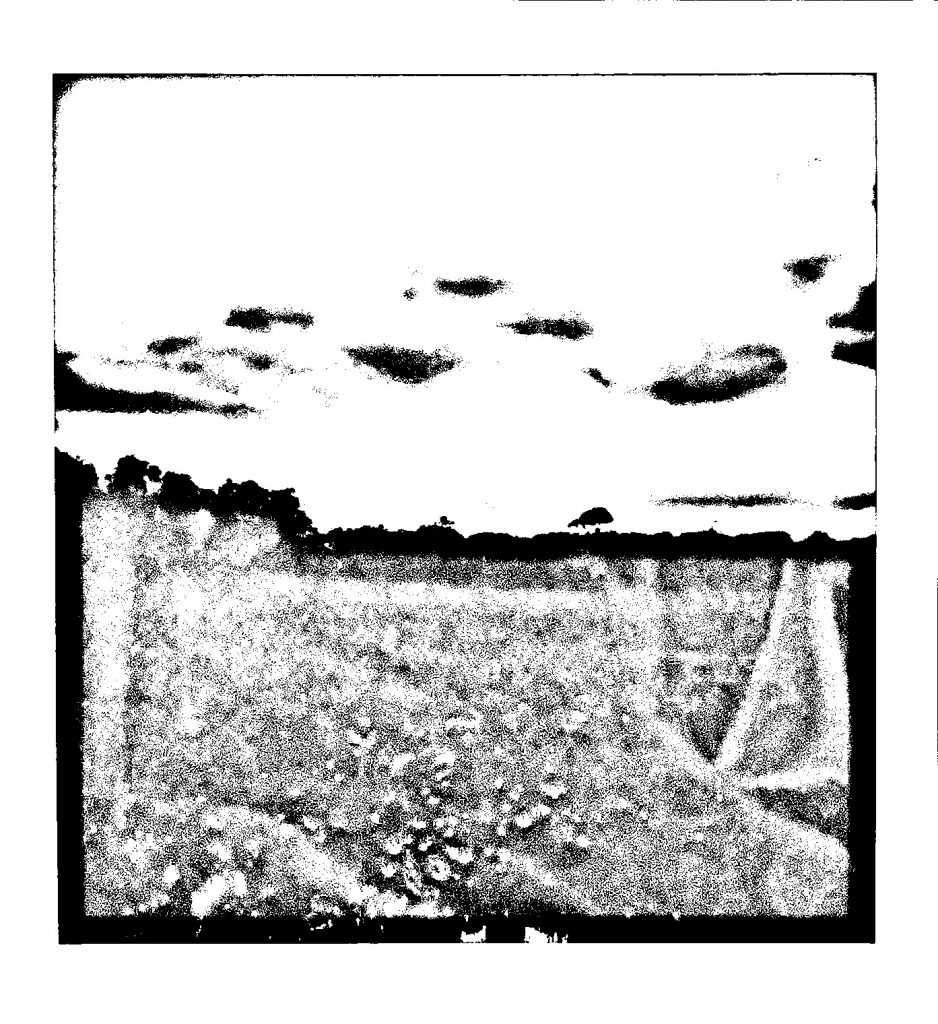
After I had the idea to incorporate the feeling of grief and loss of valuables, I moved back to my initial idea of using cave paintings as inspiration, since, in a way, we all lost something by stopping and erasing this practice. As a community worldwide, we make small efforts to preserve and protect ancient cave paintings and stone and wood carvings. A modern practice originating from cave paintings, it is, unfortunately, a dying practice. Thus, I began my research.
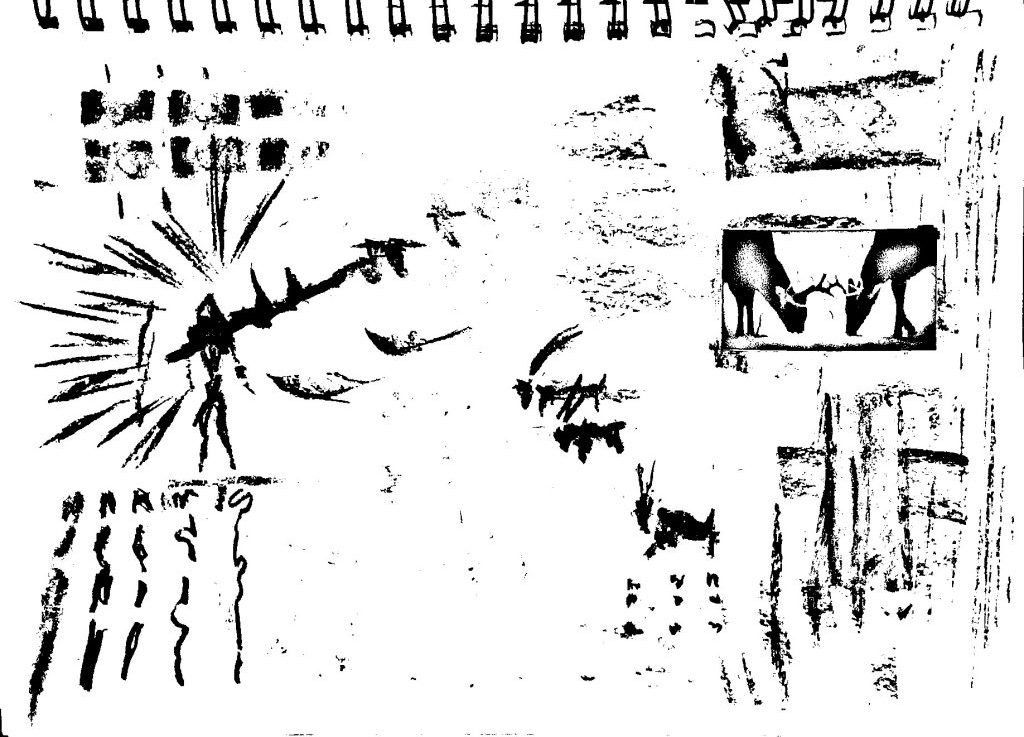
Whilst looking through my research books on cave paintings, I made small markings in my sketchbook to reveal some fascinating shapes that jumped out at me. Along with this, I made some observational sketches that could be used later. From the earlier workshops, I realised how much I loved working with charcoal, and as such, made the majority of my sketches using that medium, moving to a thin ink pen when I wanted to add small details that felt difficult with charcoal.
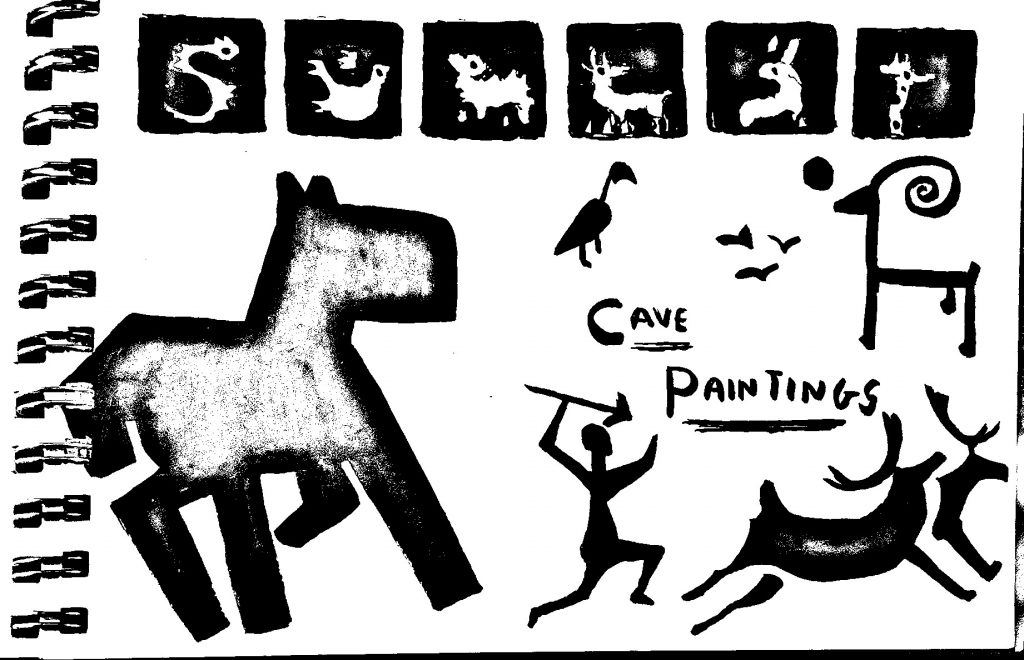
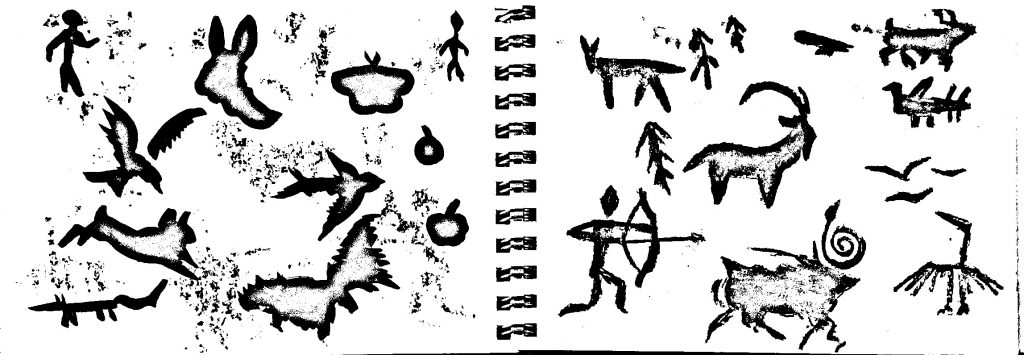
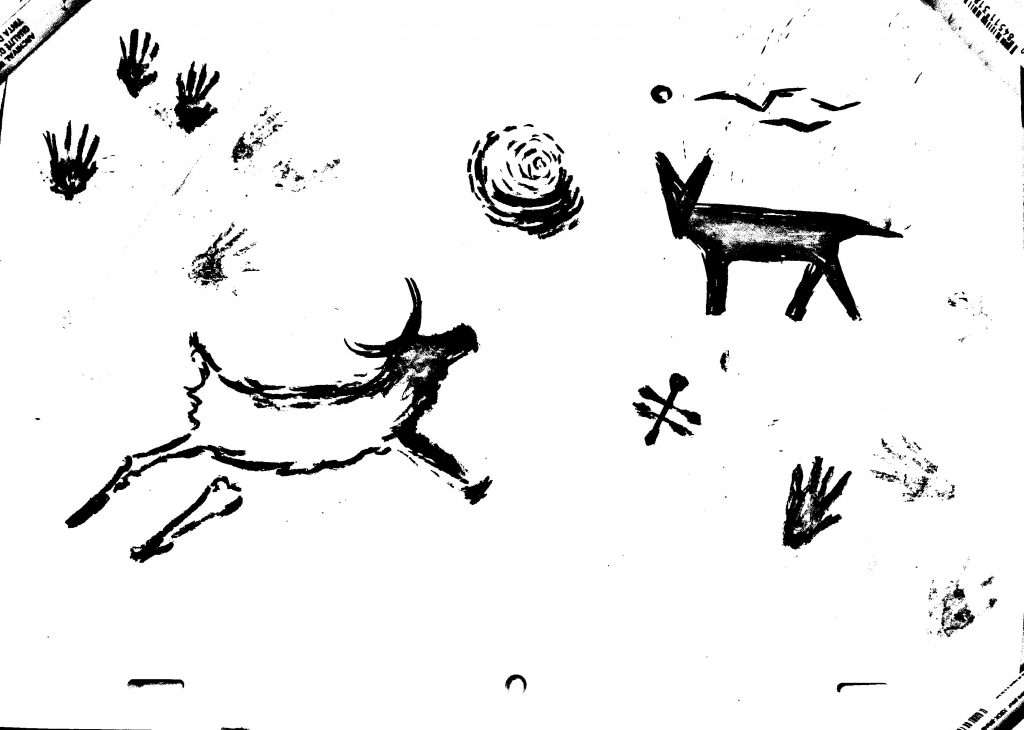
I had a lot of fun developing different symbols and telling a story through nothing but shapes and charcoal. At this point, I did not have any expectations on what to create or the pressure to make something that aligns with pre-existing sketches/animations, and that was extremely freeing. However, I was working with scanned images through a printer and abstracting them at the same time as making these bold shapes. I felt challenged to find a way to make them coexist within the animation.
Once I let go of this need to find a way to make them move, everything began to fall a little more into place and experimenting felt less exhausting when I reassured myself that eventually I would figure it out, but right now I’m just making.
I searched for animals in an online archive of public-domain old video footage and downloaded them with the aim of printing each frame. Small sections of each frame were cut out and glued onto separate pieces of paper. I then began drawing small sketches of different shapes and symbols with charcoal on the remaining background. I then conducted a very small test by taking each frame and putting them back in order. In the end, I did not favour the outcome. Still, I learnt how to split videos into individual frames and realised that whilst I enjoyed using charcoal, I wanted to experiment with wood or stone, as those practices are still current in the modern age.
Once I explored my options for using wood and stone as my medium, I realised it was much more financially accessible to use wood, as the UAL building has a wood workshop with all the necessary tools and spare pieces to work with.
Once I knew my medium, I discussed my idea with a technician in the wood workshop. I was told that, with my plan to engrave symbols and shapes, the laser cutter would be quicker and more precise, but I would need to prepare files of my designs.
I first sketched some of the pieces from my sketchbook digitally, trying to arrange the markings in specific ways to tell a story of sorts. I found this extremely challenging, as it did not resonate with me, and I lost my excitement very early on. They did not translate anything to me, only shapes that felt impersonal.
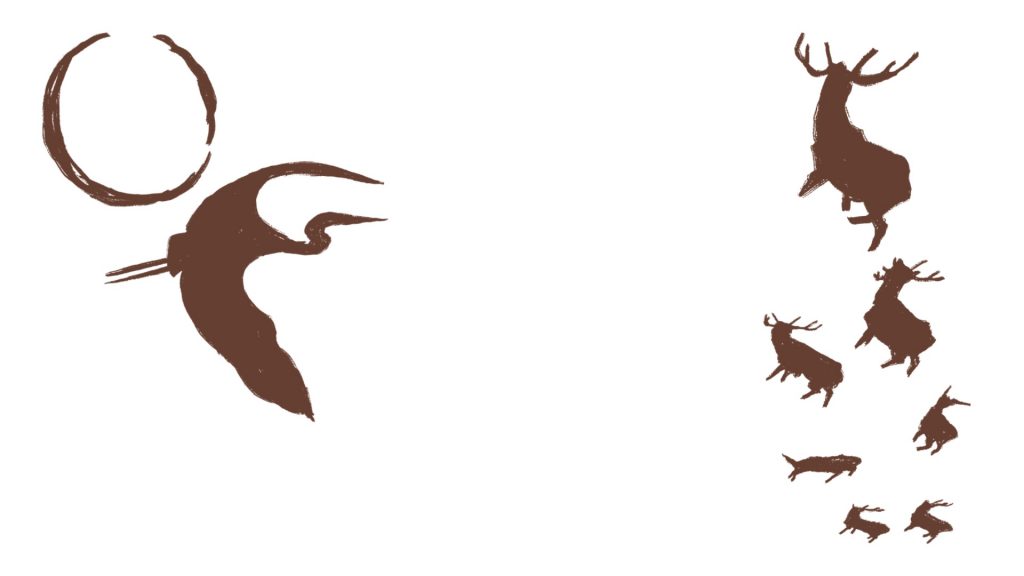
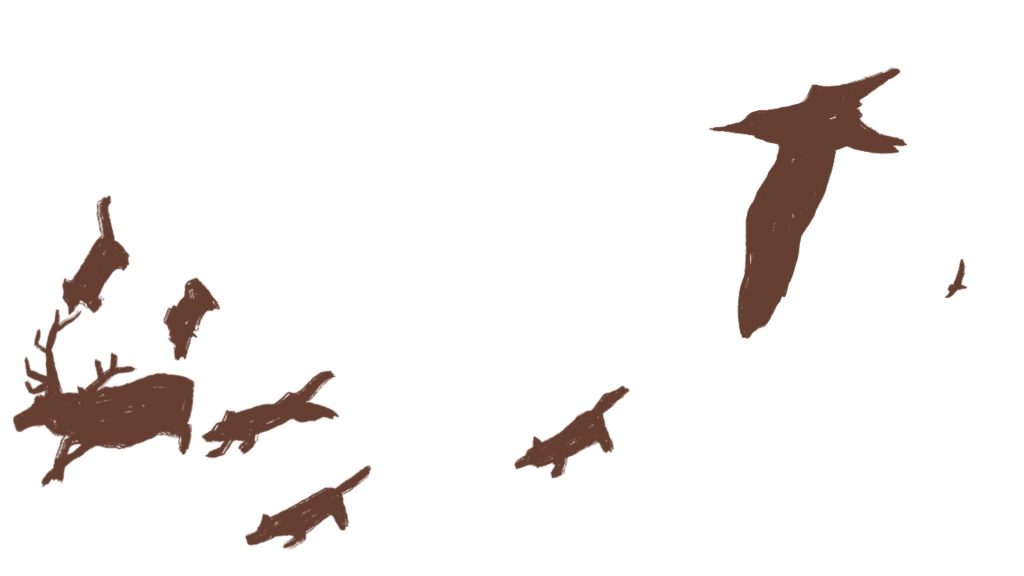
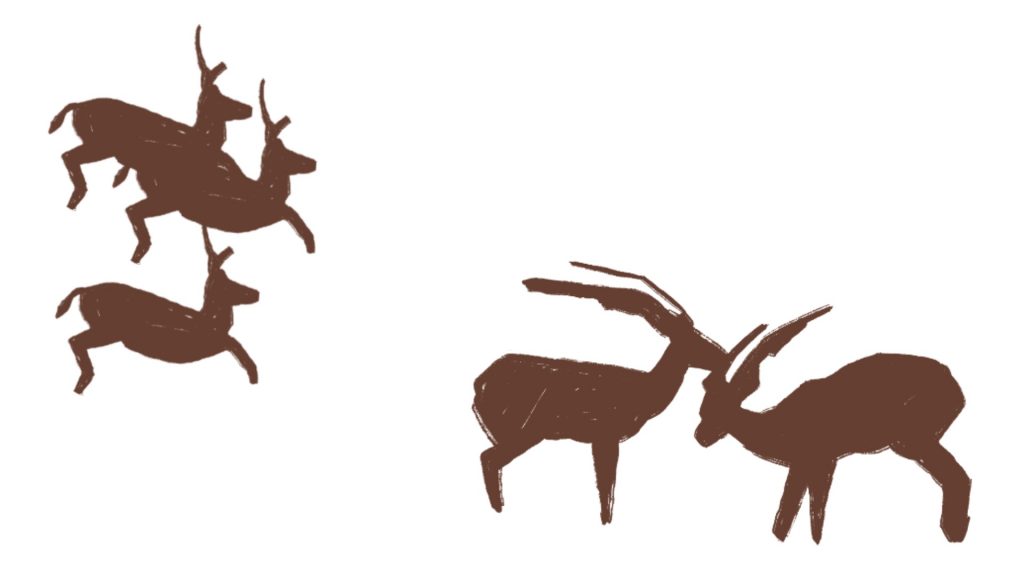
At the end, I wanted to personalise these further by researching several wildlife photographers and found an Alaskan photographer called Brian Adams. His journey with photography involves reconnecting with his Inuit culture by recording moments with his camera in Alaska and Canada. His pieces are deeply engaging and involve several natural environments and people within his community. After looking into both his series called ‘I AM ALASKAN’ and ‘I AM INUIT’, I began to find shapes and symbols that were almost hypnotic, finding his work to be so emotive and transparent towards the life of Inuit peoples. As I drew inspiration from his photography for shapes, it was important to make the backgrounds of my animation reflect the environments in both Alaska and Arctic Canada.
The small drawings that came from these photographs were fascinating and fun to create. I gave them a warm colour to appear less harsh and more inviting, and whilst I did not make each drawing have sharp edges (easier to hand-carve), I did keep each marking simple, as are found in caves. I did not want to move too far from my initial idea of remaking cave paintings in my own way, so I stuck to simple shapes. I researched and observed animals in the wild, watched several nature documentaries for inspiration, and drew on Brian Adams’s photography to simplify his images and inform my illustrations.
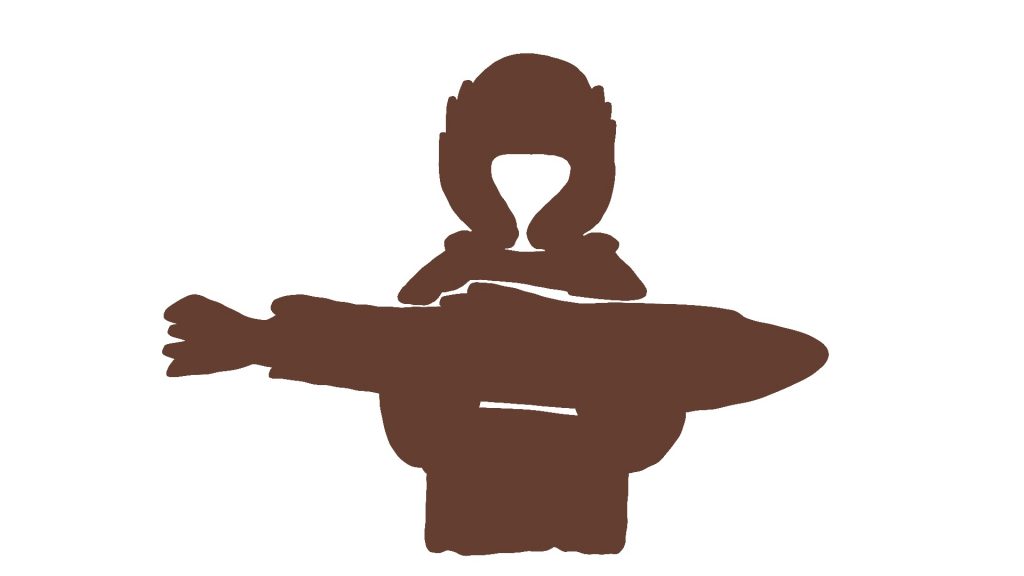
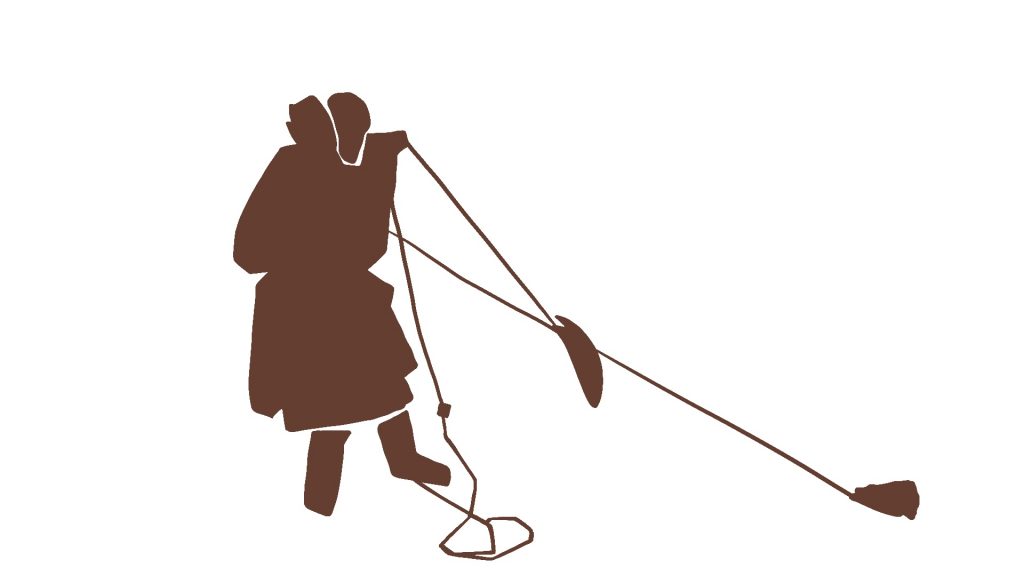
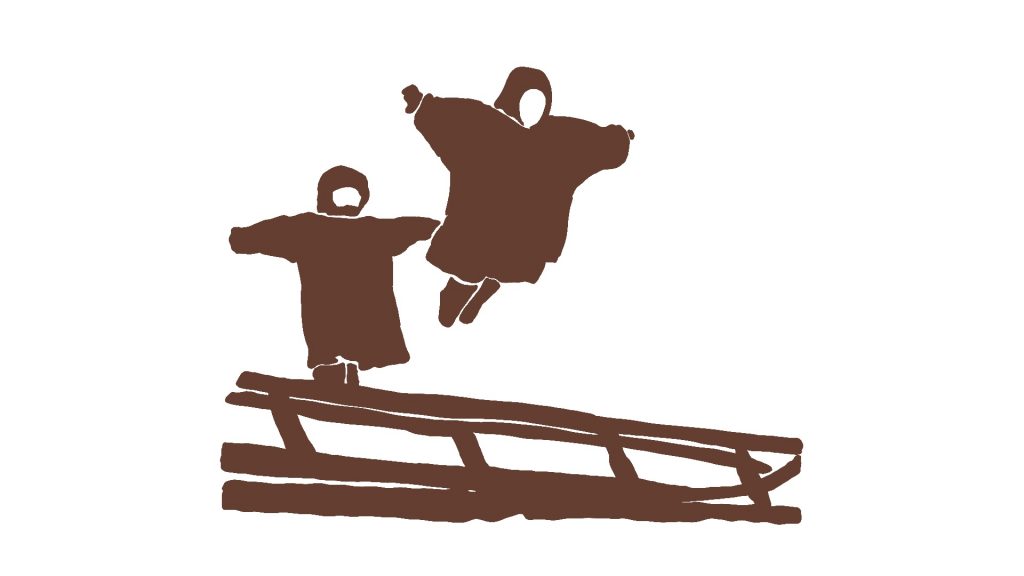
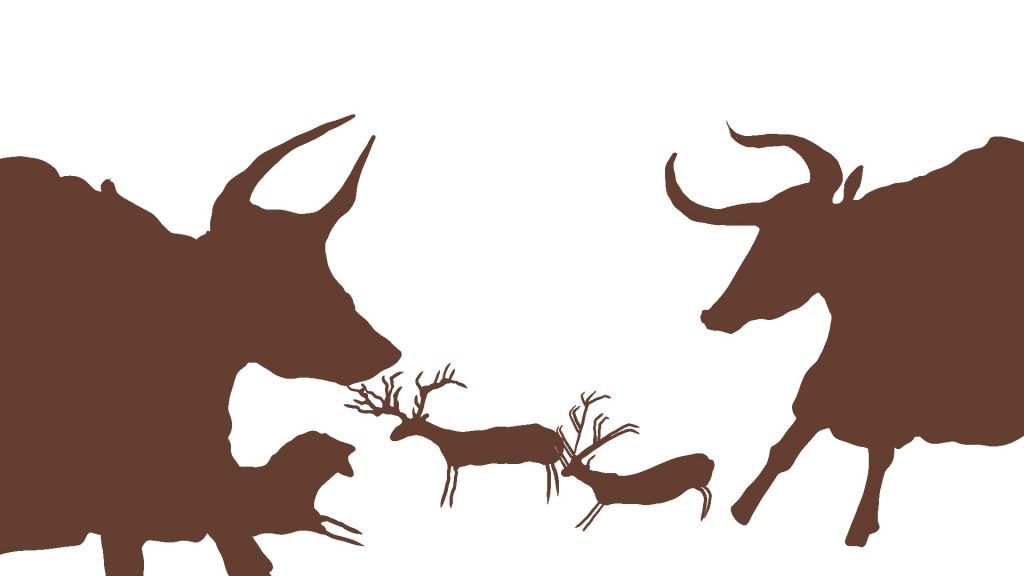
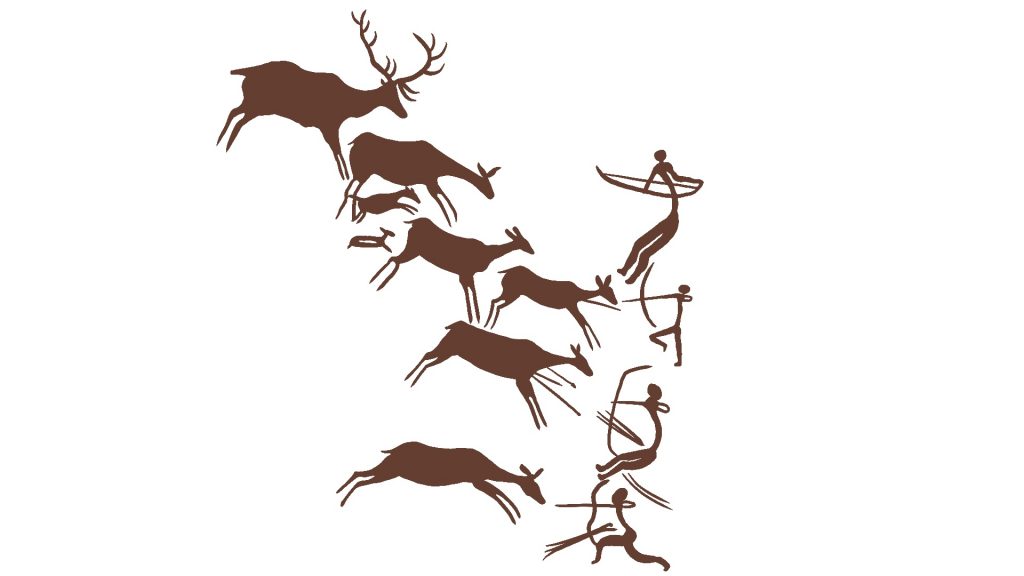
After creating these beautiful stills, I was tasked with making them move into an animation, so I went back to my initial research on cave paintings. While reexamining my notes, I thought about how interesting it might be to create a scene in which a little fluffy creature creates its own cave paintings or carvings for entertainment. As I wanted to create a cold background to reflect Adams’ photography locations, adding a fluffy element to my character felt essential.
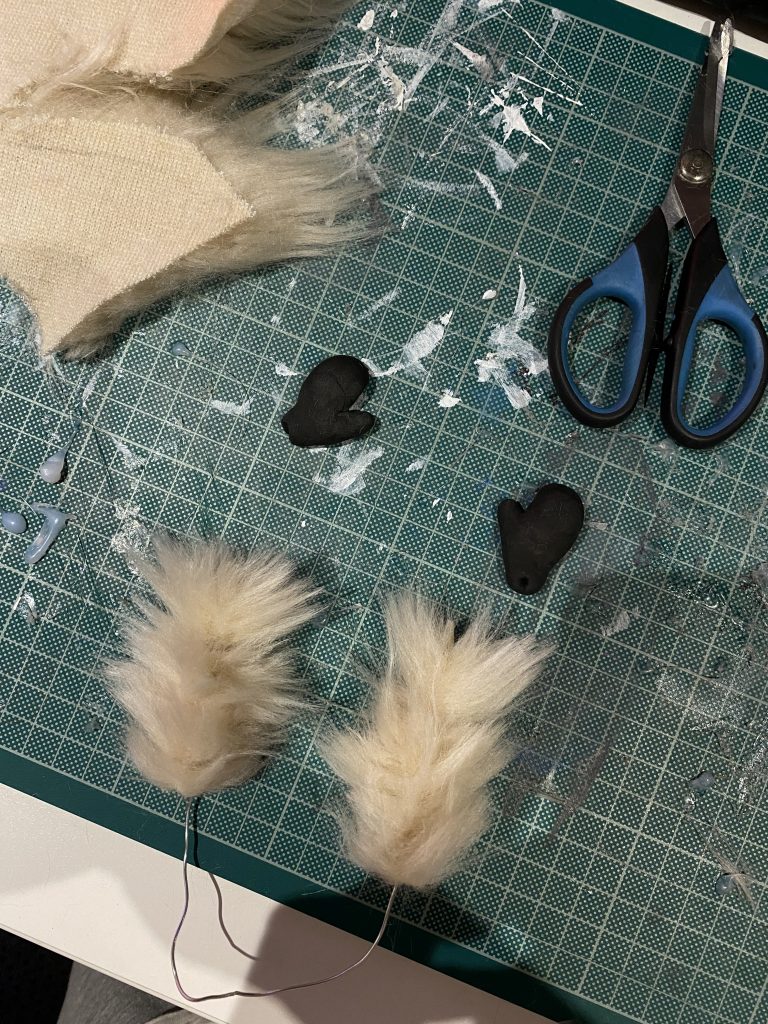
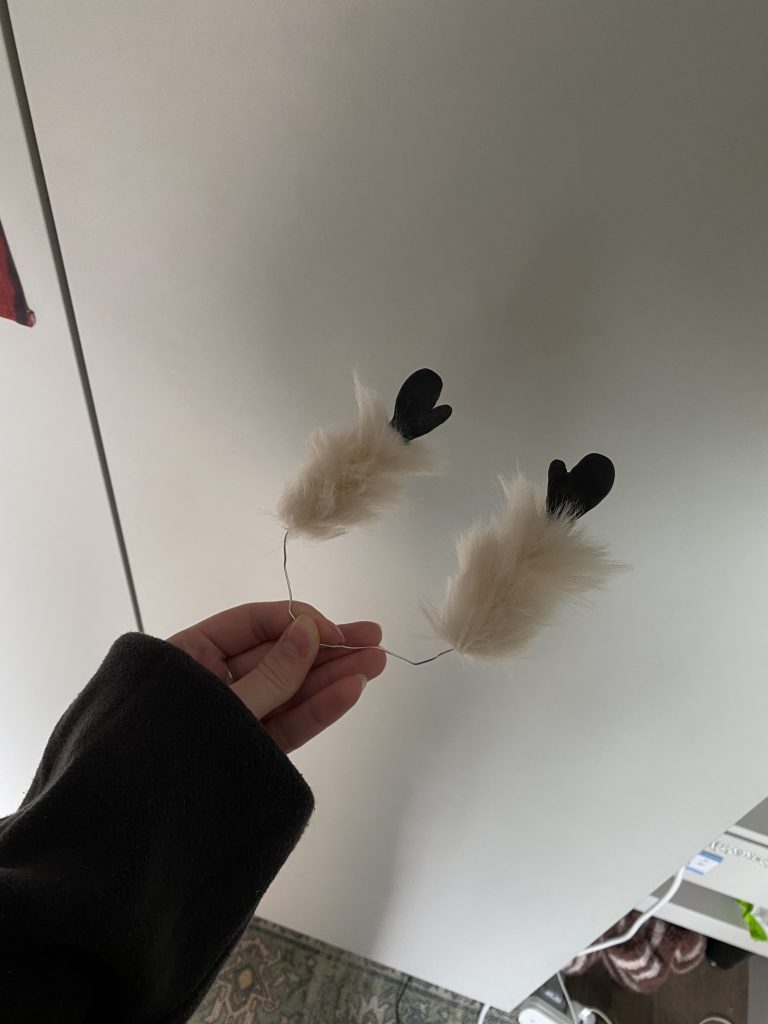
As the hands and arms were the only parts the camera would catch, I began making a wire armature for the arms, twisting the wire tightly in the centre so I could easily manipulate it during stop-motion filming.
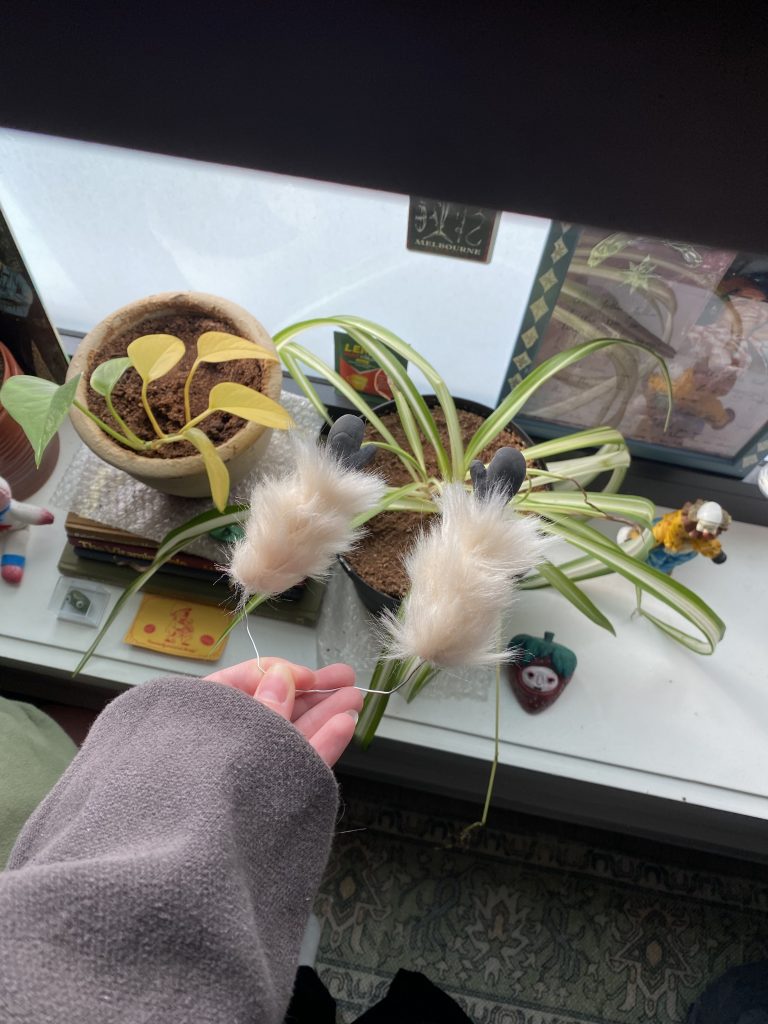
Once the armature was complete, I began cutting strips of fluffy fabric and hot-glueing them in sections, working from the top to the bottom to layer the fur. This proved to be extremely simple. Once this was complete, I began making two identical hands using black putty clay. Moulding them was not hard, as they were simple shapes, but the clay hardened and became impossible to manipulate without breaking. As such, I cut the hands off the wire armature and began moulding oven-baked clay onto the wire, revealing two pink hands that were much easier to move. Whilst I faced different challenges, I found it easy to problem-solve because I have a lot of clay- and moulding-related tools in my room.
Once I had my little puppet hands, I went back to the digital world and began making a quick animatic in Procreate to get a better layout/plan for my story. At the moment, it was all in my head, and I wanted to make something I could go back to during the creation process. To my surprise, the animatic was easy and quick to create, as I knew exactly what I wanted to do. Through the animatic, I was now able to communicate this to the wood workshop team and my tutors, making it much easier to get advice and tips on the storyline, the media to use, and the time I had available.
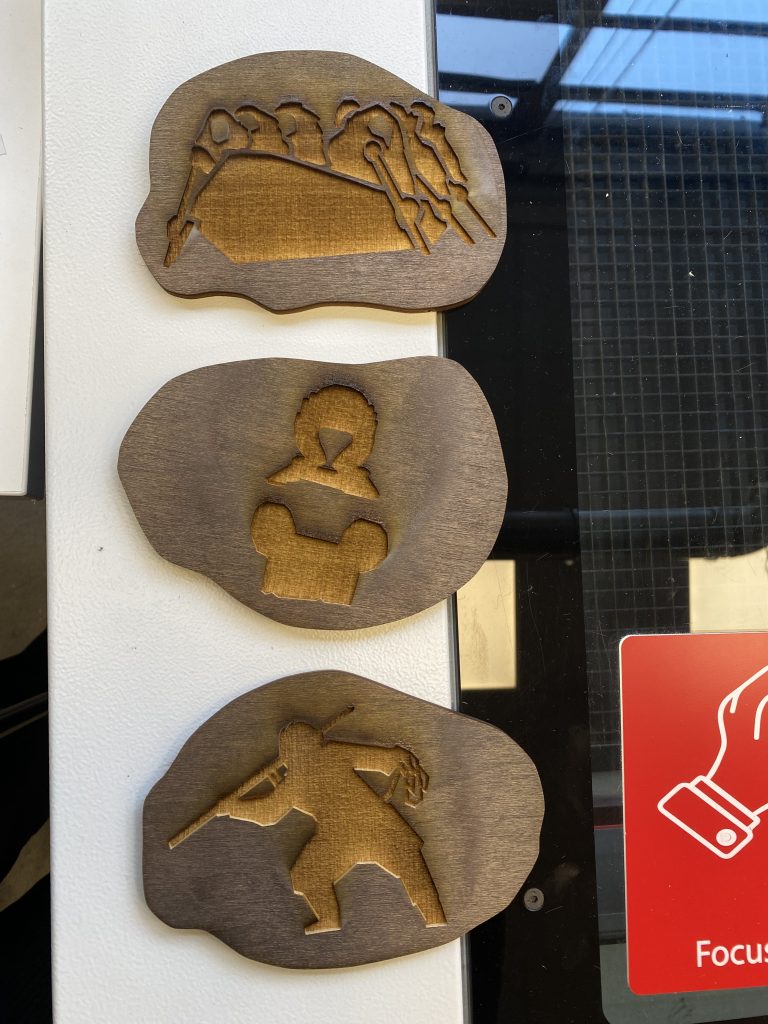
After researching different carving methods, I agreed with the technicians to use the laser cutter for precise illustration and to make carving more accessible during a symptom flare-up.
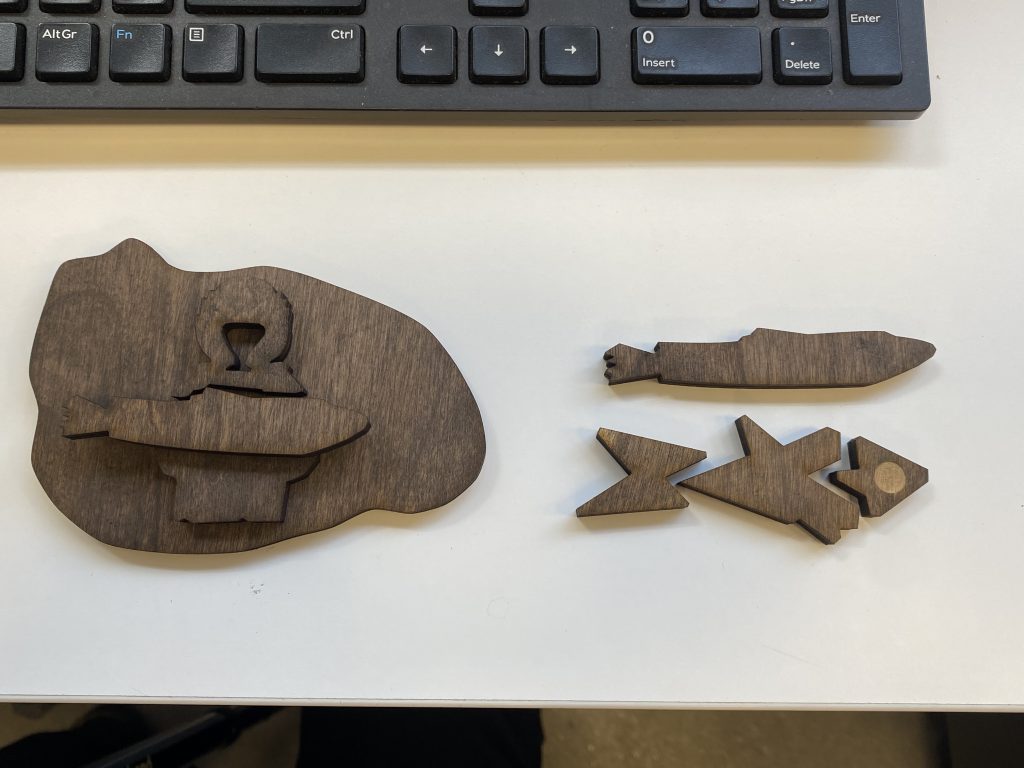
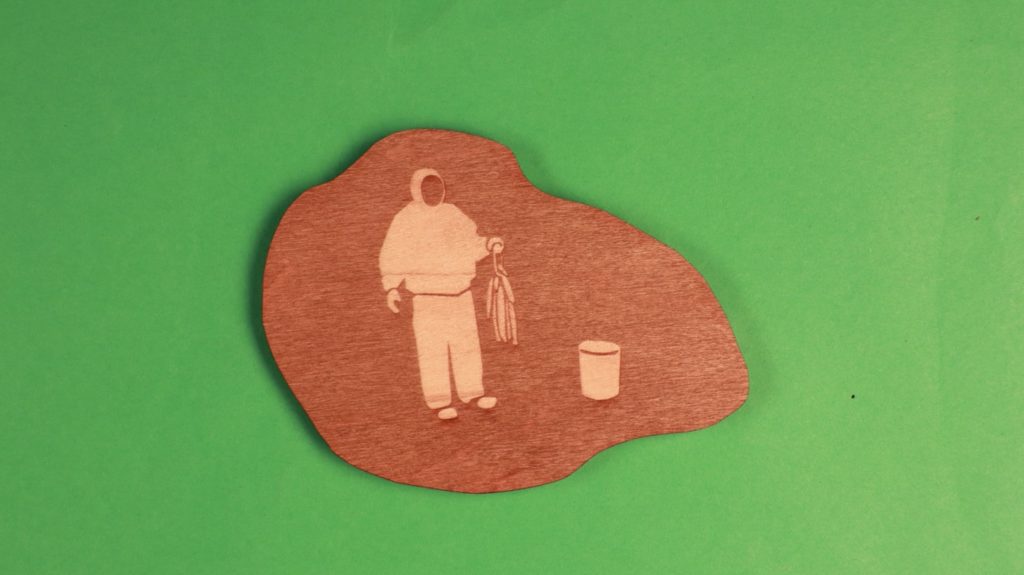
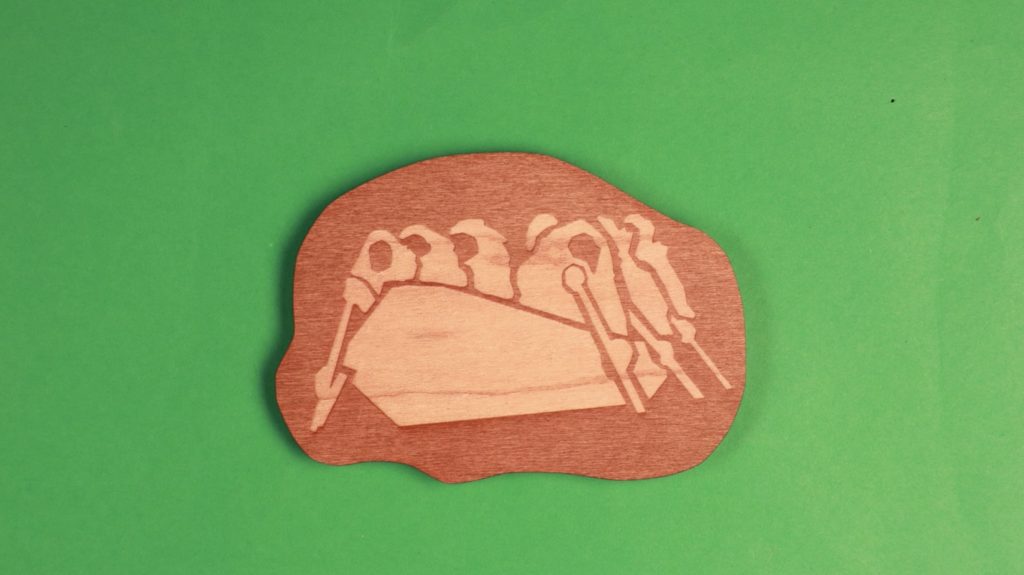
I was instructed to create an adobe illustration file for each of my designs for the lazer cutter to read. This was a simple process of measuring both the size of my props and the wooden piece, and making sure each line was either cut (black) or carved (red) using colour recognition.
I then began to experiment with different wood stains, noticing that the results where different depending on how dark the stain was. I enjoyed playing with spare pieces, as I had so much freedom to explore different textures and wood types. I decided to use spare pieces due to environmental concerns, but honestly, the results were better than when I was forced to buy a wood plank big enough for each prop. Unfortunately there wasnt any spare pieces for days and i was worried about time running out.
Leave a Reply